
From Planning to Practice: Discerning AI Through the See-Think-Do Process
In many Christ-centered schools, conversations about artificial intelligence are already underway. There is curiosity about what these tools can do, along with thoughtful questions about how they should be used.
At All Belong, we do not begin with a tool. We begin with a process.
The See-Think-Do process not only helps to know students excellently, but it can also guide how we approach something new like AI. It helps us move with intention, not urgency, so that every decision supports our goal of creating classrooms where each student is known, needed, and experiences belonging.
Rather than asking, What can this tool do? we begin with a different question: What are we noticing about our students, and how might this support them well?
See: Starting With the Student, Not the Tool
Before introducing any new tool, we take time to see and ask questions like:
- What are we noticing about our students right now?
- Where do they come alive in their learning?
- Where do they need more support?
- How are they experiencing the classroom community?
This step grounds us. It reminds us that students are not problems to solve, but people to know. AI tools can generate content quickly, adjust reading levels, or offer new ways to present material. But these features only matter if they connect to a real student in front of us.
When we begin with observation, we avoid using tools for the sake of efficiency alone. Instead, we begin to see where a tool might serve a specific student’s learning and participation. Knowing students excellently always starts here.
Think: Discerning With Care
Once we have taken time to observe, we begin to think. In our most recent All Belong book study, The AI Assist-Strategies for Integrating AI into the Very Human Act of Teaching by Nathan Lang-Raad, participants were asked to wonder about what they might need to discern prior to creating an AI-supported lesson or activity. Some of the questions the group posed were:
- What do the patterns that we are seeing tell us about the students and their needs?
- What strengths are we seeing, and how can we build upon them?
- What might be getting in the way of engagement or understanding?
As we consider using AI, we also ask:
- How might this tool support what we are noticing?
- Where might it fall short?
- How do we use it in a way that reflects our values as a Christ-centered community?
AI can help organize ideas, suggest instructional strategies, or create multiple versions of a lesson. It can be a useful support as we plan. But it does not know the student. Discernment matters here. Educators should still be carefully considering how a tool might support the work they are already doing to understand each student.
Do: Using Tools in Service of Belonging
From this place of understanding, we take action to meet the needs of our diverse learners. In some classrooms, this may look like using AI to create multiple entry points into a lesson, making content more accessible for a range of learners. In others, AI may help generate ideas more efficiently, creating space for teachers to spend more time with students to build relationships.
When used with intention, AI can create time and capacity for teachers. And that time and capacity can be used to focus on what matters most: relationships, observation, and connection.
But the goal is not simply improved instruction. The goal is belonging.
We want students not only to access content, but to contribute meaningfully to the life of the classroom community. We want their strengths to be visible and their presence to matter. A teacher in our book study put this into practice by creating a Project-Based Learning (PBL) experience for their students. This experience made it possible to showcase the student’s strengths as well as supporting the student by working with peers. Tools can support access. Teachers cultivate belonging.
Returning to the Process
AI will continue to evolve. New tools will emerge, and new questions will follow.
The See-Think-Do process remains as a consistent way to understand each learner.
- See what is happening with the student, discerning strengths and challenges.
- Think carefully about ways to support a student’s God-given strengths while also accommodating challenges as needed.
- Do what is needed to support that student well. This is best done in a collaborative process.
This is how we move from planning to practice in a way that reflects a posture of knowing the students first, then creating an action plan that meets the needs of those children. If you are beginning to explore AI in your classroom or school, you do not need to start with mastery. You can start with one student.
- What are you noticing in the classroom?
- What might that be telling you?
- What is one small, thoughtful step you could take?
As you follow this process, you will not only use tools more effectively—you will continue the deeper work of knowing students excellently.
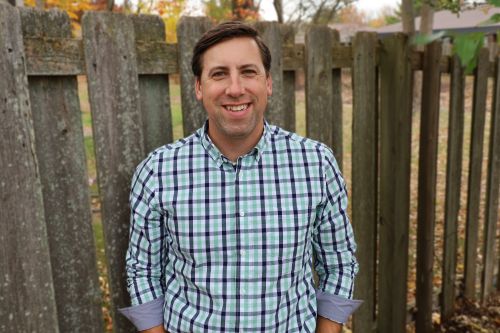
Tyler Harms
Teacher Consultant
Tyler is a dedicated teacher consultant supporting K-12 schools nationwide in curriculum development, interventions, behavior supports, and teacher self-care. With 12 years of experience as a special education teacher in both elementary and secondary settings, he is a passionate advocate for educators, students, and families. Tyler holds a Bachelor's Degree from Calvin College and two Master’s Degrees in Special Education and Mathematics.