
Understanding the Heart: A Christ-Centered View of Social-Emotional Development
In recent years, social-emotional development (SED) has become a frequent topic of conversation in education. Schools across the country are recognizing that students’ emotions and relationships are deeply connected to their learning, well-being, and flourishing.
In Christ-centered schools, we have the opportunity to view social-emotional development through a Christ-centered lens, grounded in the belief that each student is created in the image of a relational, loving God. This understanding shapes how we teach, how we respond to student needs, and how we build communities where every learner belongs. Our faith gives us a powerful framework for understanding why social-emotional development matters. With that lens in mind, it invites us to ask a deeper question: What if, instead of seeing social-emotional development as separate from faith, we see it as a way to help students understand God’s design for their hearts and relationships?
A Biblical Foundation for Social-Emotional Development
Over the past year at All Belong, we have sought to be guided by Scripture as we deepen our understanding of what it means to know students well, especially as it relates to their social and emotional development. Our hope is to use this foundation to define, shape and guide how we understand and support social-emotional development in Christ-centered schools.
All Belong defines social-emotional development as growing in the understanding of how God uniquely created you and me—and how He designed us to live and grow together in community in ways that honor and glorify Him.
This definition reflects our beliefs that:
- Each person is created in the image of God, bears God’s image, and is loved by God. As such, we all have the capacity for love, creativity, and reason. (Genesis 1:26-27)
- God created each of us with a broad range of emotions that He invites us to express. (Psalms)
- Each person has been placed in this world for a God-given purpose with inherent dignity and worth. Each of us should have the opportunity to realize, understand, and accomplish that purpose. (1 Corinthians 12:27)
- God created us to be in relationship with Him and each other. He has placed us in communities where these relationships are vital to each person's development as we work together toward the restoration of His creation. (Romans 15:7)
Why Development Matters
It is with this set of beliefs that we seek to understand our students’ social-emotional development. We use the word development intentionally. Just as physical or cognitive skills grow over time, social-emotional skills also grow throughout childhood, adolescence, and adulthood. Understanding developmental expectations helps us recognize what lifelong skills students may still be learning—and which ones may indicate a lagging skill needing support.
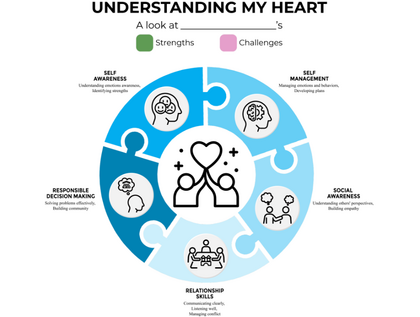
As we seek to know students excellently from a social-emotional perspective, we can consider the five core competencies: self-awareness, self-management, social awareness, relationship skills, and responsible decision-making. Skills within these competencies support learning, shape relationships, and prepare students to engage with the world with wisdom and compassion.
As we work to support our students in these skills, we recognize that this process is best supported by schools, families, and churches partnering together. Through this partnership, students have increased opportunities to learn and practice their own social-emotional skills in a variety of environments. When families, churches, and schools work together, students grow in their ability to understand themselves, relate to others, and navigate life in community.
A Call to Educators in Christ-centered Schools
As educators in Christ-centered schools, we are called not only to teach minds but to shepherd hearts. While true transformation comes through the work of the Holy Spirit (Galatians 5:22–23), attending to students’ social-emotional development is one way we can respond to that calling.
When we teach social-emotional skills through a biblical lens, we seek to help students understand themselves, relate to others, and flourish in community. It is important to recognize that attending to social-emotional development does not replace spiritual formation; it complements it. As students worship, study Scripture, navigate conflict, and practice reconciliation within their school, they are growing socially and emotionally. It is our hope that through this teaching and support, our students will be marked by love, joy, peace, patience, kindness, goodness, faithfulness, gentleness, and self-control. When framed in a Christ-centered lens, social-emotional development becomes a meaningful part of forming students who reflect Christ to the world around them.
At All Belong, it is our prayer that Christ-centered schools continue to build classrooms and schools where spiritual formation is supported by social-emotional growth, where students deepen their understanding of how God uniquely created each person, and where they experience the beauty of how He designed us to live and grow together in communities that honor and glorify Him.
B.A. Calvin College, Psychology, English Minor
M.E. Lehigh University, Human Services
S.Psy.S. Lehigh University, Educational Specialist, School Psychology
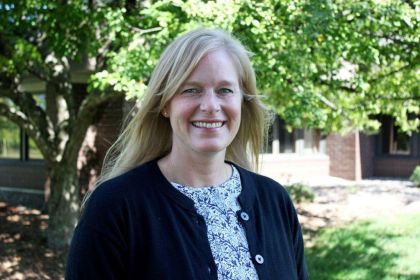
Betsy Winkle, Ed.S
COO | Director of Student Services
B.A. Grand Valley State University, Psychology & Special Education with endorsements in cognitive impairments & emotional impairments
Additional Endorsement: Autism Spectrum Disorders
M.A. Oakland University, Special Education with emphasis in Autism Spectrum Disorder

Katie Kiser
Teacher Consultant
BA Hope College, Elementary Education and Special Education with emphasis on learning disabilities
Oakland University, Reading Recovery Certification
M.Ed. Grand Valley State University, Special Education Administration