
Funding Inclusion Starts With Telling the Story
Would you believe me if I told you that a pencil could help fund inclusion at your school?
I visited an All Belong member school classroom as a fourth-grade teacher invited her students to the rug for a vocabulary lesson. One young man brought his pencil with him, and the teacher knew it would likely become a distraction.
She could have told him to put it back on his desk. But she knew her student well enough to recognize that a direct command could lead to an elevated response.
Instead, she asked him to choose a friend who could put the pencil back on his desk.
There was a moment of reluctance. Then several classmates called out, “Pick me! Pick me!”
His face lit up.
He handed the pencil to one of his friends, who returned it to his desk and came back to sit beside him. The student was beaming.
The whole interaction took about 30 seconds.
It might seem like a small moment. But look at what happened:
- A teacher knew her student well enough to turn a potentially difficult situation into a seamless redirection.
- A student who might otherwise have been labeled as having “behavior problems” remained connected to his classmates and engaged in learning.
- His peers understood what he needed and eagerly stepped up to help.
That is inclusion.
And that is a story worth sharing.

Inclusion Is More Than a Line in the Budget
We often think about the financial responsibility that comes with being an inclusive school.
More staff. More space. More training.
Those are real expenses. And when they appear as line items on a budget, they can easily look like costs to reduce or cut.
But a story can change how a community sees those same expenses.
Instead of, “We need to find the money for another educational specialist,” the conversation becomes, “Look what happens when we have the resources to support every student.”
Instead of, “We're asking families to contribute more because inclusion costs more,” the conversation becomes, “We are investing in a school where every child has the opportunity to belong.”
Start With the Stories You Already Have
Invite teachers and aides to watch for little wins that might otherwise go unnoticed.
Kayla offered to put Lily's book away so Lily wouldn't become distracted. Dylan helped Micah put on his coat before recess. Avery recognized that she needed a break and independently asked for help.
These moments seem small, but they tell a powerful story. They remind staff that their work is making a difference and show students learning to care for one another.
They also reveal something beautiful about what it means to be a Christ-centered school: We are teaching students what it looks like to live as members of the body of Christ.
“So in Christ we, though many, form one body, and each member belongs to all the others.” (Romans 12:5, NIV)
Share the small and big stories that reflect this membership in the body of Christ with parents, prospective families, and your board. Celebrate them in school communications. Give students opportunities to share what they are learning from one another.
When the whole school community can see and celebrate inclusion, tuition equity becomes much easier to embrace.
Families aren't being asked to “pitch in” to support one student. They are investing in a community where every child benefits from learning, growing, serving, and belonging together.
Tell the Story Before You Ask for the Gift
One school administrator desperately wanted to say “yes” to two families whose children required significant support.
Welcoming these students would require hiring a full-time educational specialist. The need was clear. The financial resources were not.
An afternoon spent researching family foundations led to a 15-minute conversation with a potential funder. The administrator shared the stories of these two students and explained how the school believed God was calling them to open their doors.
The funder heard more than a staffing need.
They heard a story.
And they committed a three-year grant to cover the cost of the additional staff.
Donors want to know that their support makes a difference. They want to see what is possible because they said yes.
So before asking your community to fund inclusion, show them what their investment makes possible.
Tell them about the pencil.
Tell them about the moments that would never appear in a budget but reveal the extraordinary value of an inclusive school community.
Because when people can see the beauty of belonging, they don't just see a cost.
They see an opportunity to be a part of a community that more closely reflects the diversity and interdependence of God's kingdom.
What Stories Are You Already Living?
If your school's journey toward inclusion is just beginning, look for the small moments.
Celebrate each step. Invite your staff to become storytellers. Share those stories with your school community.
Let inclusion become more than a service your school provides. Let it become part of the story of who you are.
Because the most compelling case for funding inclusion may not be found in your budget at all.
It may be found in a pencil.
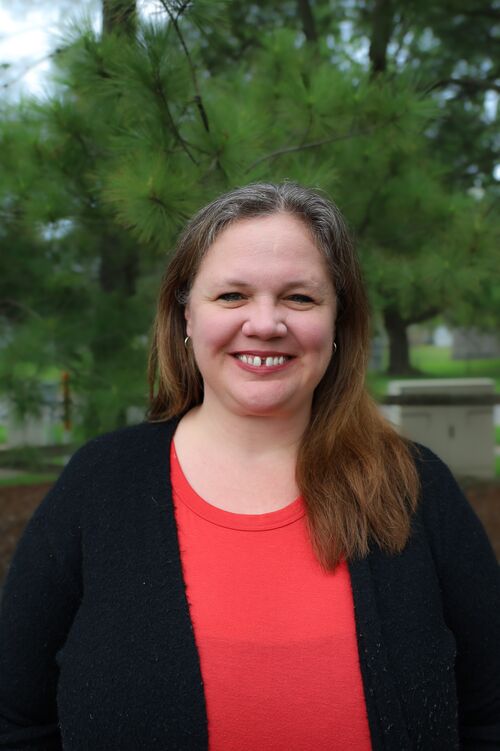
Jamie Fisher
Donor Engagement
Jamie serves as Advancement Manager at All Belong, where she helps connect people and resources to All Belong’s mission. She brings a passion for storytelling, event planning, and the incredible ways God is at work through inclusive, Christ-centered education.